
Natural body lotion is one of the most popular everyday skincare products. It helps moisturize and soften the skin while providing a lighter skin feel than many rich body creams and butters.
As interest in natural skincare formulation continues to grow, many beginners and aspiring cosmetic formulators want to learn how to make natural body lotion at home using carefully selected ingredients and a properly formulated recipe.
Making a successful body lotion involves more than simply mixing oils and water. A stable lotion requires an appropriate emulsifier, carefully calculated ingredient percentages, proper processing temperatures, adequate preservation and the correct manufacturing method.
In this beginner-friendly guide, you will learn how to make homemade body lotion step by step using a complete 100 g formulation. We will cover the ingredients, equipment, preparation method, common mistakes and the function of each ingredient.
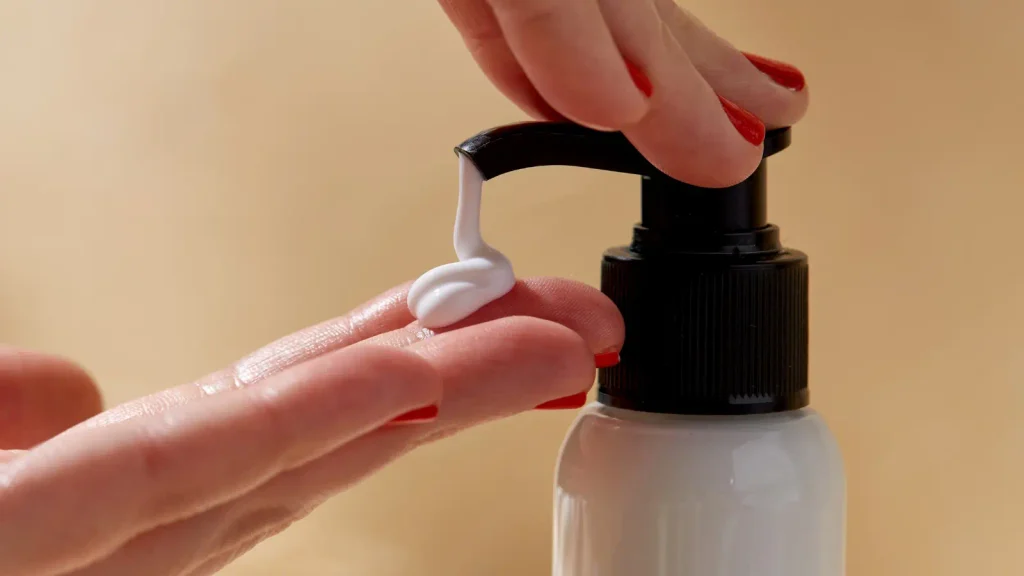
Table of Contents
What Is Natural Body Lotion?
Natural body lotion is a moisturizing cosmetic emulsion that combines a water phase with plant oils using an appropriate emulsifier. This creates a smooth, relatively lightweight product that spreads easily over the skin and is suitable for everyday body care.
A natural body lotion formulation may contain carefully selected plant oils, natural butters, humectants and active ingredients. Because lotion contains a significant amount of water, an appropriate preservative is also required to help protect the product against microbial growth.
One advantage of learning to formulate your own lotion is that the formula can later be adapted for different skin types, textures and purposes once you understand the fundamentals of cosmetic formulation.
What Is the Difference Between Body Lotion and Body Cream?
Both body lotion and body cream are emulsions containing an oil phase and a water phase. However, the difference is not determined simply by the presence of oil and water.
The overall formulation matters, including the size and composition of the oil phase, the emulsifier system, the type and amount of butters and other ingredients used to modify viscosity and skin feel.
Body lotions typically have a relatively high water phase and a moderate oil phase, giving them a lighter consistency that is easy to spread over larger areas of the body.
Body creams are generally formulated to have a thicker, richer consistency and may contain higher levels of oils, butters or other consistency-enhancing ingredients.
| Comparaison | Body Lotion | Body Cream |
| Texture | Light to medium and more fluid | Thicker and richer |
| Application | Easy to spread over larger areas | Usually requires more massaging |
| Skin feel | Generally lighter and less greasy | Richer and more occlusive |
| Typical packaging | Pump bottle or squeeze tube | Jar or a pump suitable for thicker products |
In the recipe below, the high water phase combined with Montanov L and xanthan gum helps create a lotion that has structure while remaining easy to spread. Glycerin and panthenol support hydration without turning the formulation into a heavy body cream.
If you would also like to formulate a moisturizer specifically for the face, see our guide How to Make a Natural Face Cream at Home: Step-by-Step for Beginners.
When Should You Use Body Lotion?
Body lotion can be particularly useful after showering to help maintain skin hydration and as an everyday moisturizer when you prefer a lighter texture.
Its relatively light consistency also makes it practical in warm or humid weather and for people who prefer moisturizers that spread easily without leaving a very heavy or greasy skin feel.
Equipment Needed to Make Body Lotion
Making homemade body lotion requires many of the same basic tools used in other cosmetic formulations, including a digital scale, heat-resistant beakers, a water bath, suitable mixing equipment, a thermometer and a pH meter or appropriate pH testing method.
For a detailed explanation of these tools and how they are used, link this section to your English article: Essential Tools for Making Natural Skincare Products at Home.
Natural Body Lotion Recipe
Batch size: 100 g
| Phase | Ingredient | Percentage (%) | Weight (g) |
| A | Jojoba Oil | 7% | 7 g |
| A | Argan Oil | 7% | 7 g |
| A | Cocoa Butter | 3% | 3 g |
| A | Montanov L | 3% | 3 g |
| B | Distilled Water | 74.2% | 74.2 g |
| B | Vegetable Glycerin | 2% | 2 g |
| B | Xanthan Gum | 0.3% | 0.3 g |
| C | Panthenol | 2% | 2 g |
| C | Vitamin E | 0.5% | 0.5 g |
| C | Preservative Eco | 1% | 1 g |
| D | pH Adjuster | As needed | As needed |
Note: The listed ingredients total 100% before any pH adjuster is added. In precise formulation work, the water phase can be adjusted q.s. to 100% if the pH adjustment adds a measurable amount to the batch.
What Does Each Ingredient Do?
- Jojoba Oil: A lightweight emollient that helps soften the skin and gives the body lotion a smooth skin feel. Its good oxidative stability also makes it useful in skincare formulations.
- Argan Oil: An emollient plant oil that contributes to a softer, more nourishing skin feel.
- Cocoa Butter: Adds richness and body to the lotion while contributing to its consistency and emollient properties.
- Montanov L: The emulsifier in this formula. It allows the oil and water phases to form a stable, homogeneous emulsion.
- Distilled Water: Forms the main aqueous phase of the lotion and contributes to its lightweight consistency.
- Vegetable Glycerin: A humectant that attracts water and helps support skin hydration.
- Xanthan Gum: Helps increase viscosity and supports the stability and consistency of the formulation.
- Panthenol (Pro-Vitamin B5): A humectant and conditioning ingredient that supports hydration and helps leave the skin feeling softer.
- Vitamin E: An antioxidant that helps protect the oils in the formulation against oxidation. Vitamin E is not a preservative and does not replace an appropriate broad-spectrum preservation system.
- Preservative Eco: The preservative used in this water-containing formulation to help protect it against microbial growth. Follow the supplier’s recommended usage level, processing temperature and pH range.
- pH Adjuster: Used when necessary to bring the final formulation into the required pH range.
How to Make Natural Body Lotion Step by Step
1. Clean and Sanitize Your Equipment
Thoroughly clean your work surface, equipment and packaging before beginning. Sanitize the equipment using an appropriate method and allow it to dry completely.
Avoid touching surfaces that will come into direct contact with the lotion after they have been prepared.
Good manufacturing hygiene is particularly important for water-containing formulations because they are susceptible to microbial contamination.
2. Prepare Phase A
Weigh the jojoba oil, argan oil, cocoa butter and Montanov L into a heat-resistant beaker.
3. Prepare Phase B
In a separate clean beaker, combine the vegetable glycerin and xanthan gum. Mix until the xanthan gum is evenly dispersed and no obvious clumps remain.
Add the glycerin and xanthan mixture to the distilled water and stir until evenly dispersed.
Pre-dispersing xanthan gum in glycerin helps make it easier to incorporate into the water phase.
4. Heat Both Phases
Heat Phase A and Phase B separately to approximately 75°C (167°F).
The temperatures of the two phases should be reasonably close when they are combined, as processing temperature can influence emulsification.
5. Combine and Emulsify
Once the ingredients in Phase A have melted and both phases have reached approximately the same temperature, gradually add Phase A to Phase B while mixing.
Use suitable mixing equipment for cosmetic formulation and continue mixing until a smooth, homogeneous white emulsion forms and begins to develop viscosity.
Note: Mixing speed, shear and duration can affect the texture and stability of an emulsion. Avoid excessive mixing that introduces unnecessary air and bubbles into the lotion.
6. Cool the Lotion
Continue stirring gently as the emulsion cools.
Once the temperature falls below 40°C (104°F), the lotion will usually begin to develop more of its final viscosity.
Do not judge the finished consistency while the lotion is still hot, as emulsions can continue to thicken during cooling and after preparation.
7. Add Panthenol, Vitamin E and Preservative
Once the lotion has cooled below 40°C (104°F), add the panthenol, vitamin E and Preservative Eco.
Mix thoroughly until all ingredients are evenly incorporated.
Always check the technical documentation for your specific preservative and other heat-sensitive ingredients, as processing requirements can vary by supplier and ingredient.
8. Measure and Adjust the pH
Take a suitable sample and measure the pH using a calibrated pH meter or appropriate cosmetic pH test strips. For this recipe, the target final pH is approximately: pH 5.0–5.5
If adjustment is necessary, add a suitably diluted pH-adjusting solution in very small increments.
Mix thoroughly after each addition and measure the pH again before adding more.
9. Package the Body Lotion
Once the lotion has cooled and is homogeneous, transfer it into a clean, appropriately prepared container.
Allow the finished lotion to settle before making a final assessment of its viscosity and texture.
Common Mistakes When Making Body Lotion
1. Incorrect Emulsification
If the oil and water phases are not emulsified correctly, the lotion may have an uneven texture or separate during storage.
How to avoid it: Use appropriate mixing equipment and processing conditions until a homogeneous emulsion forms, then continue gentle stirring during cooling.
2. Changing the Formula Percentages
Changing the amount of water, oils or emulsifier without understanding their function can result in a lotion that is too thin, too thick or unstable.
How to avoid it: Beginners should follow the formulation as written before experimenting with modifications.
3. Using Poorly Prepared Equipment or Packaging
Contaminated equipment or packaging can introduce microorganisms into the product even when a preservative is used.
How to avoid it: Thoroughly clean and appropriately sanitize equipment and packaging before making the lotion.
4. Adding Heat-Sensitive Ingredients Too Early
Adding ingredients such as panthenol, vitamin E or certain preservatives at an unsuitable processing temperature can affect their performance.
How to avoid it: Add cool-down ingredients at the temperature specified for the formulation and according to supplier instructions.
5. Incorrect Storage
Excessive heat and direct sunlight can negatively affect the quality and stability of a cosmetic formulation over time.
How to avoid it: Store the finished lotion in suitable, well-closed packaging away from excessive heat and direct sunlight.
Possibly, but emulsifiers are not automatically interchangeable at the same percentage.
Different emulsifiers have different recommended usage rates, oil-phase requirements and processing methods and can produce very different textures.
If you are a beginner, make the original formulation with Montanov L before attempting to reformulate it with another emulsifier.
Separation can occur for several reasons, including inappropriate processing temperatures, insufficient emulsification, incorrect ingredient percentages, unsuitable substitutions or incompatibility between ingredients.
If you have changed the original recipe, you should not assume that the original formula’s stability will remain unchanged.
Some plant oils can be substituted, but changing them can affect the skin feel, viscosity, oxidative stability and overall characteristics of the finished lotion.
For your first batch, it is better to follow the original formula. Once you understand how it behaves, you can experiment with suitable substitutions.
A water-containing body lotion should not be made for normal storage and use without an appropriate preservation system.
Water provides conditions in which microorganisms can grow. Vitamin E does not replace a preservative because it is an antioxidant rather than an antimicrobial preservation system.
A freshly made lotion can be thinner while it is still warm and may continue to develop viscosity as it cools.
Allow the lotion to settle before evaluating its final consistency. If it remains unusually thin, possible causes include inaccurate weighing, incorrect processing, changes to the formula or problems with emulsification.
Conclusion
Learning how to make natural body lotion at home is a useful way for beginners to develop practical cosmetic formulation skills. A successful lotion depends on more than combining water and oils: accurate weighing, correct emulsification, appropriate preservation and pH control all contribute to the quality of the finished formulation.
In this guide, you learned how to prepare a natural body lotion recipe using jojoba oil, argan oil, cocoa butter, Montanov L, glycerin, panthenol and other functional ingredients. You also learned what each ingredient does, how to prepare the lotion step by step, and which common formulation mistakes to avoid.
Once you have mastered the basic recipe, you can begin exploring more advanced formulations and carefully considered ingredient substitutions while keeping stability, preservation and overall product performance in mind.
To continue learning about natural skincare formulation, read How to Make a Natural Face Cream at Home: Step-by-Step for Beginners and How to Make Natural Liquid Hand Soap at Home: Beginner Recipe.